The Returns Collapse — and Why Brexit Didn't Cause It
Enforced returns from the UK peaked at around 14,850 in 2013 and fell continuously for seven years. By 2019 — three years after the Brexit referendum — they had reached a trough of 7,192, a fall of 51%. The collapse was already well underway before a single vote was cast. The Migration Observatory at Oxford, using Home Office data, identifies three primary causes: a 19% real-terms cut to Immigration Enforcement spending between 2014/15 and 2020/21; a sharp rise in last-minute legal challenges (removal attempts cancelled rose from 11% in 2013 to 52% in 2019); and a 93% fall in visa refusal referrals between 2013 and 2020, which shrank the pipeline of people identified for removal.
Since 2021, returns have recovered. In 2025, enforced returns reached 9,914 — the highest since 2017 — while voluntary returns reached 28,004, similar to 2016 levels. Total returns in 2025 were approximately 38,000, the highest since 2016. The recovery reflects increased Immigration Enforcement funding (£833 million in 2024/25, up 69% from 2022/23) and bilateral return agreements with Albania, India and others. Even so, 2025's enforced returns remain 33% below the 2013 peak.
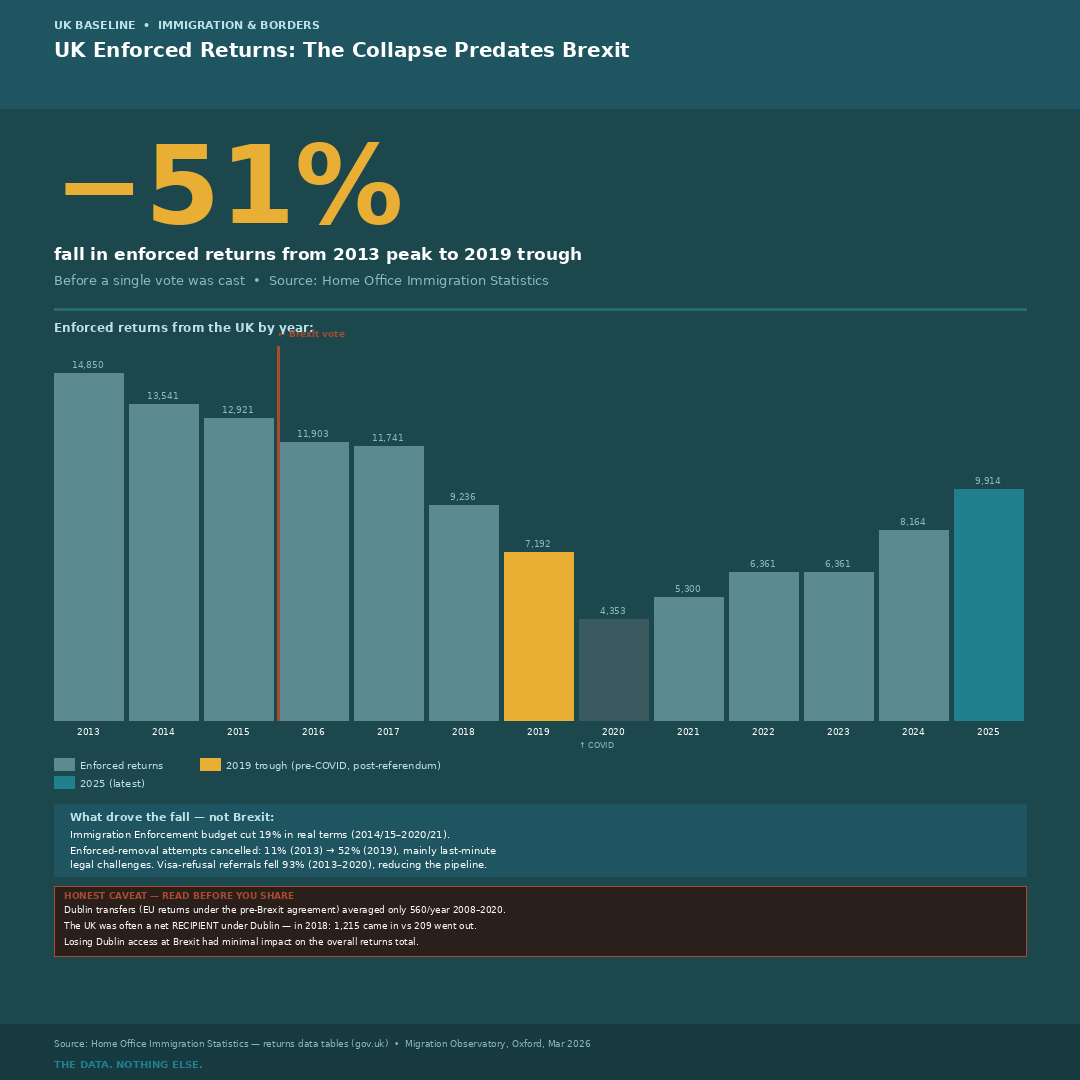
Returns statistics count events, not unique individuals — one person returned twice counts as two. Dublin transfers (averaging 560 per year) were a separate category and are not included in the enforced returns totals shown here. The 2020 figure reflects COVID-related disruption to removals operations.
Small Boats: 4% Returned from 194,000 Arrivals
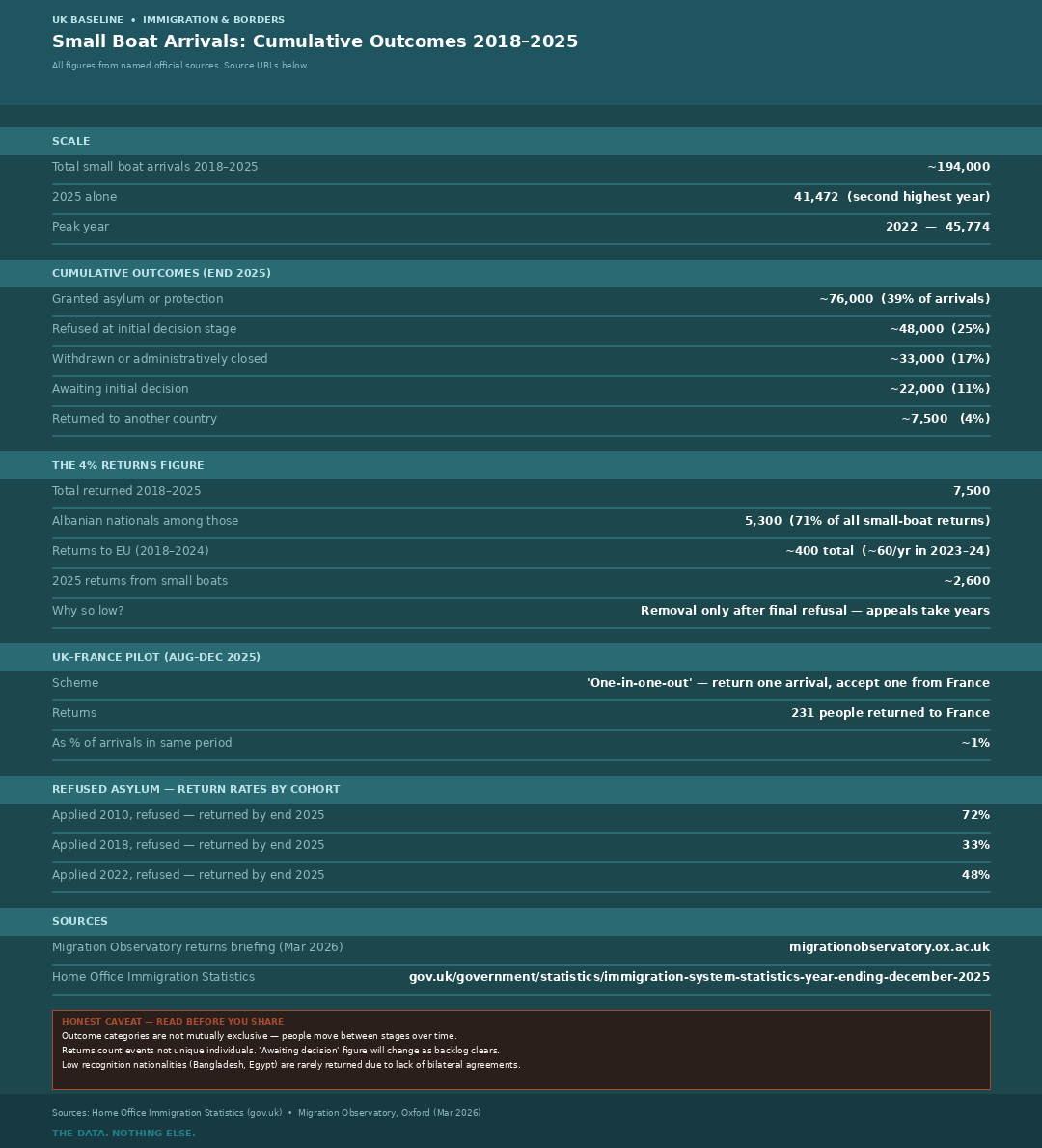
Between 2018 and 2025, approximately 194,000 people arrived in the UK on small boats across the Channel. By the end of 2025, around 7,500 of them — 4% — had been returned to another country. The dominant outcome for those whose claims have been decided is protection: around 76,000 have been granted asylum or another form of protection. Around 48,000 have been refused at the initial decision stage, 33,000 have had their applications withdrawn or administratively closed, and 22,000 were still awaiting an initial decision at the end of 2025.
The 4% return rate reflects the structure of the asylum system rather than enforcement failure alone. Removal can only take place after a claim has been finally refused following all appeal stages, a process that can take years. Of the 7,500 returns, 5,300 (71%) were Albanian nationals — a nationality with a low recognition rate, an established bilateral return agreement, and a sharp spike in arrivals in 2022 that has since reversed. Most other high-volume nationalities — Iranians, Afghans, Eritreans — have recognition rates above 70% and are rarely returned.
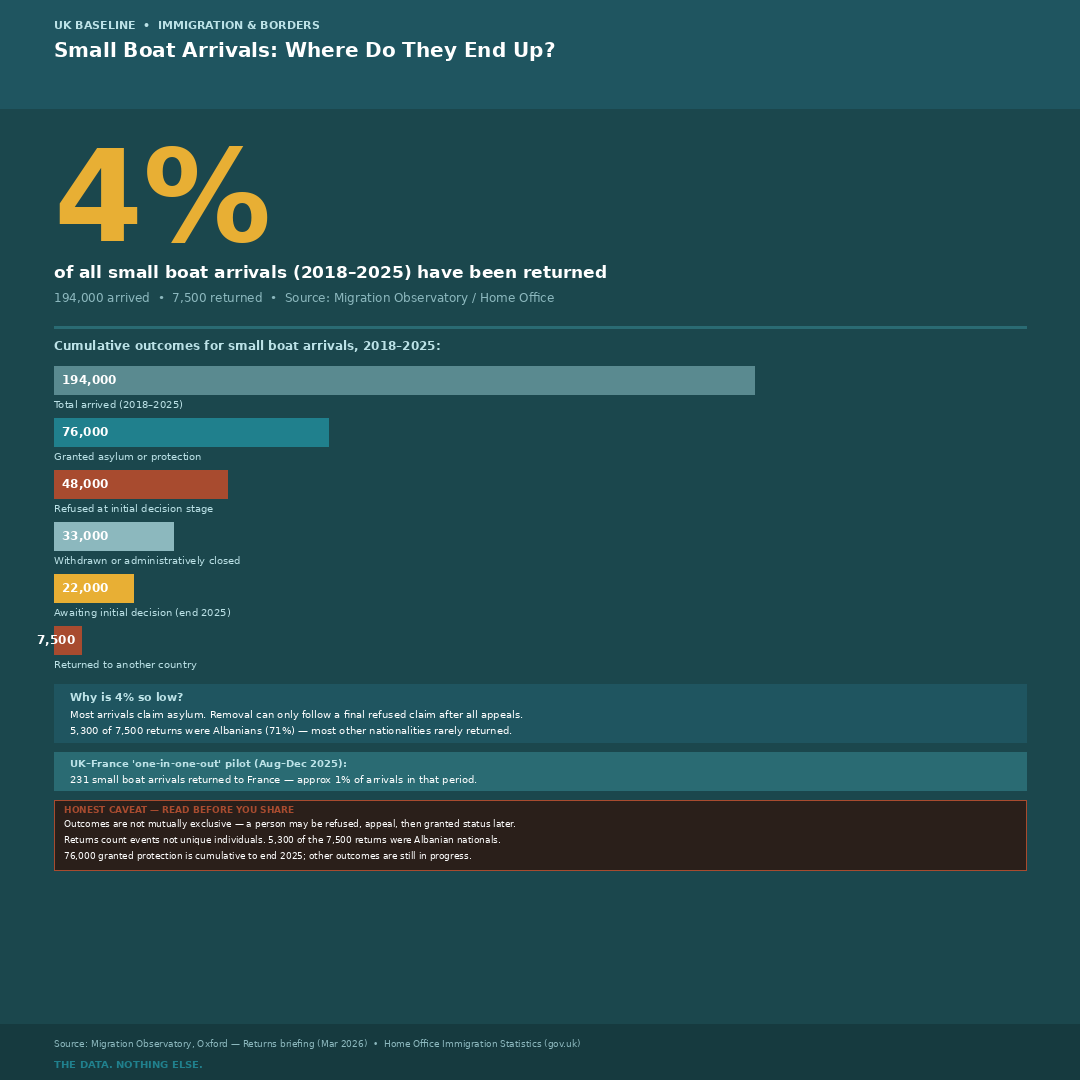
Outcome categories are not mutually exclusive and people move between stages over time. The 48,000 refused at initial decision includes many who are still in the appeals process. The 76,000 granted protection figure is cumulative to end 2025; outcomes for the 2024 and 2025 arrival cohorts remain largely unresolved.
Dublin: The UK Was a Net Recipient, Not a Net Sender
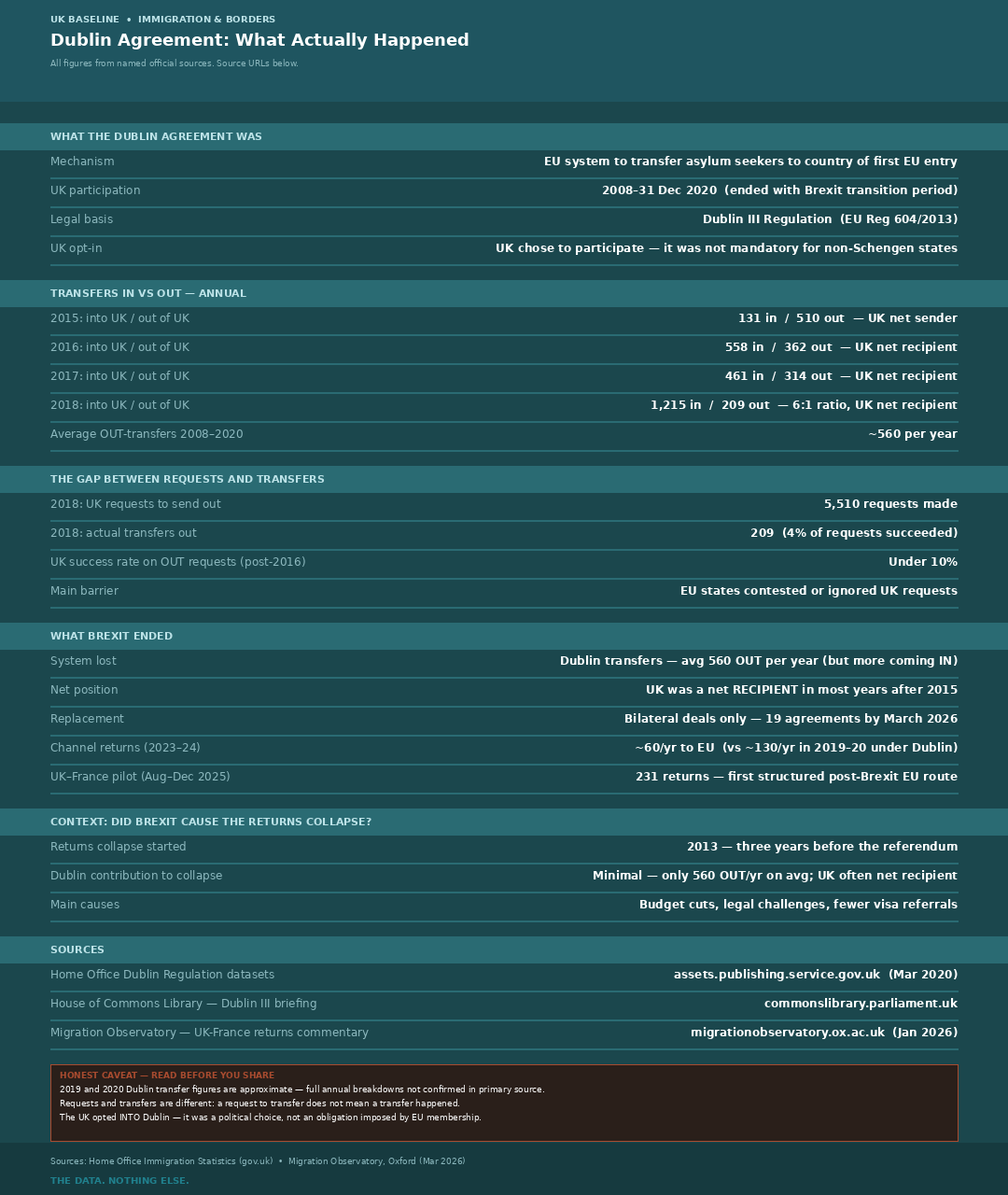
The Dublin III Regulation allowed EU member states to transfer asylum seekers to the country where they first entered the EU. The UK participated from 2008 until the end of the Brexit transition period on 31 December 2020. It is widely cited in political debate as a mechanism that enabled the UK to return asylum seekers to Europe — and losing it is routinely presented as a Brexit cost.
The Home Office's own published data tell a different story. In 2018, 1,215 asylum seekers were transferred into the UK under Dublin — and 209 were transferred out. That is a ratio of nearly 6:1 in the wrong direction. The UK made 5,510 outgoing transfer requests in 2018; only 209 — 4% — actually resulted in a transfer. After 2016, the UK's success rate on outgoing Dublin requests fell below 10%. The pattern was consistent across multiple years: 2016, 2017 and 2018 all saw more people transferred into the UK than out.
Between 2008 and 2020, the UK transferred an average of around 560 people out per year under Dublin. Over the same period, comparable numbers or more came in. After Brexit, Channel returns to the EU fell from around 130 per year in 2019–20 to around 60 per year in 2023–24. The UK–France "one-in-one-out" pilot agreement, operational from August 2025, returned 231 people to France in its first five months.
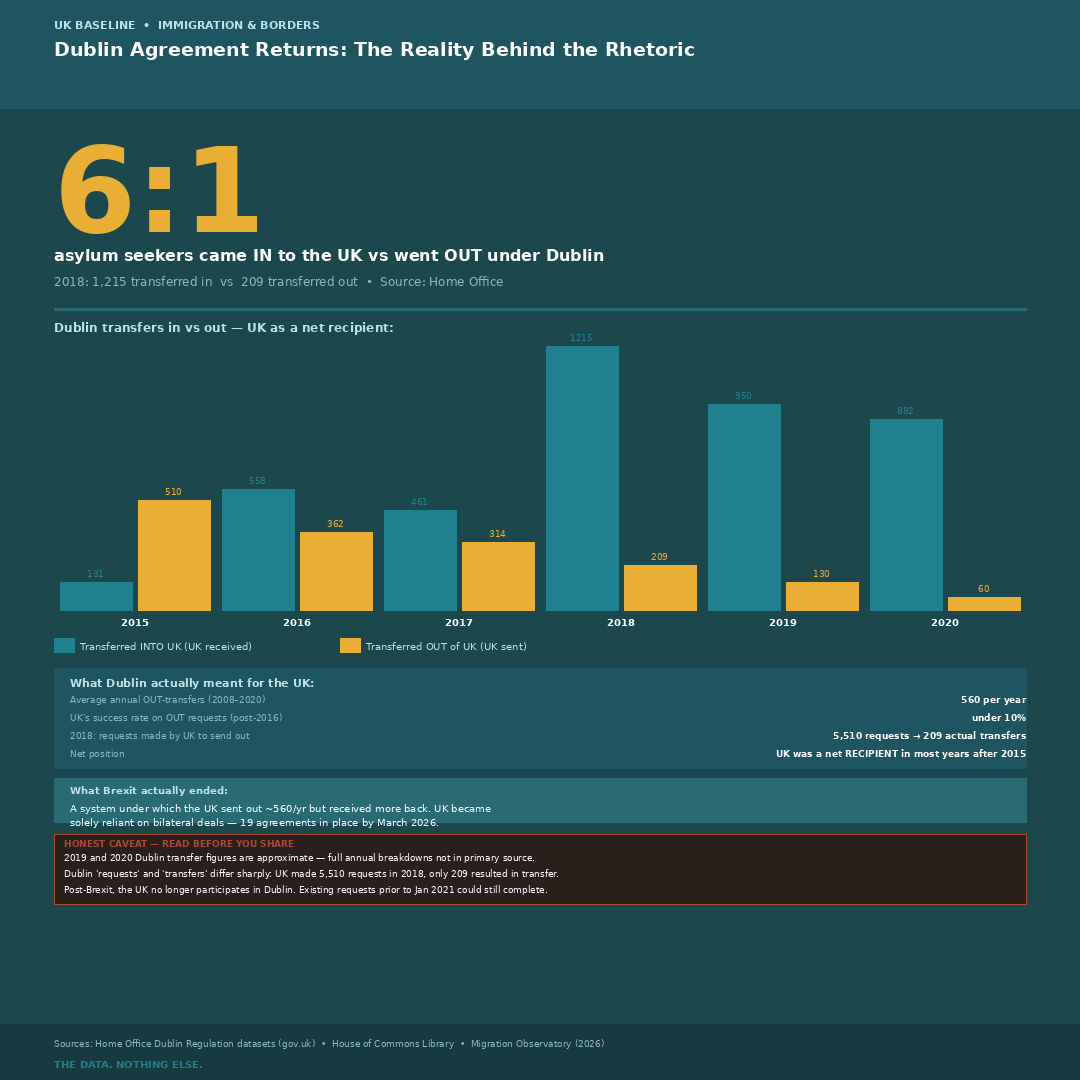
The UK opted into the Dublin Regulation — participation was a political choice, not an obligation of EU membership. The 2019 and 2020 transfer figures cited here are approximate; the Home Office published full annual breakdowns only to 2018. Requests and actual transfers are materially different: a request does not guarantee a transfer, and most UK requests were refused or ignored.
Key Numbers
Cheat Sheets
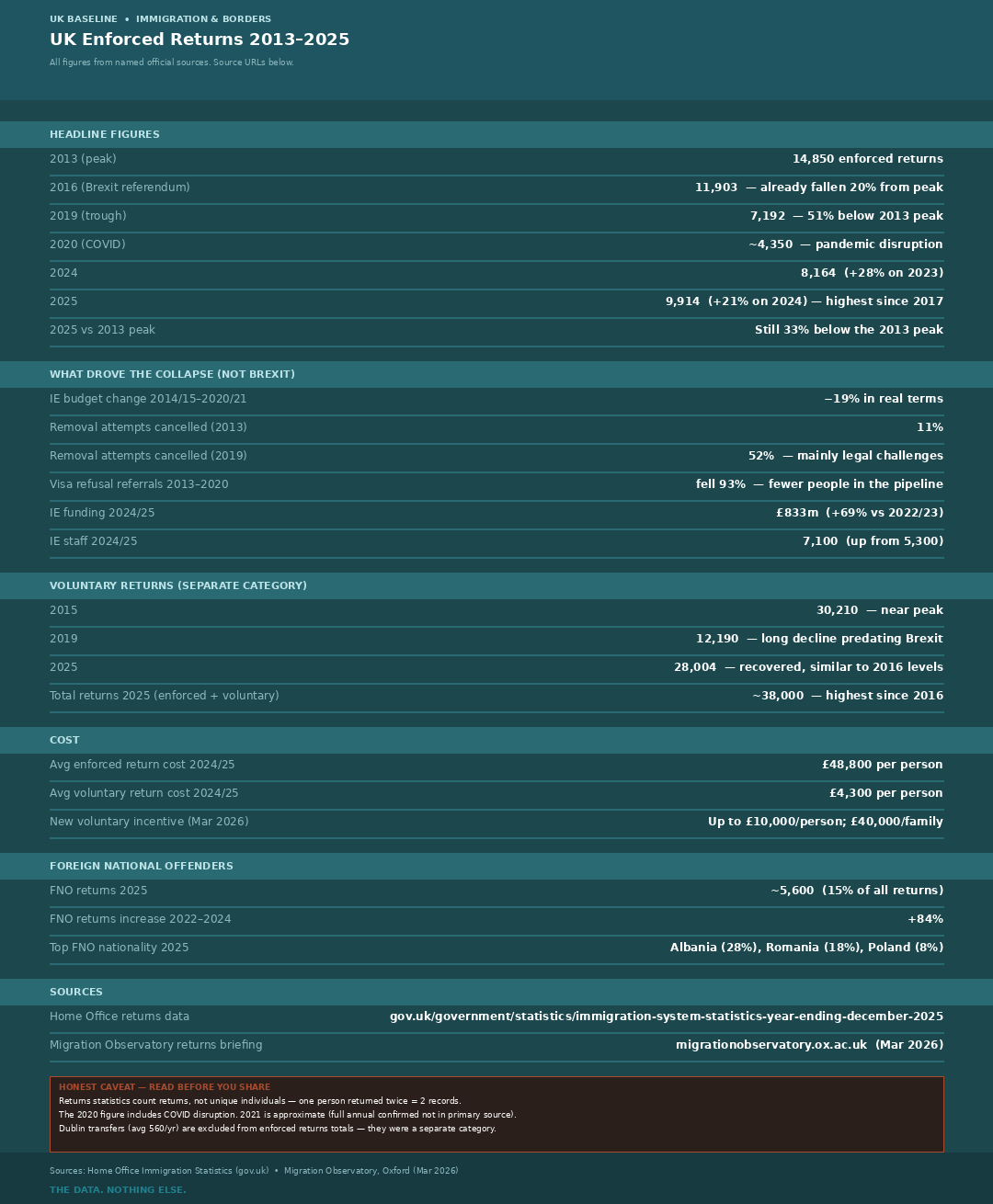
Three cheat sheets covering the full data in this brief. Source URLs on every sheet.
Sources
- Home Office — How many people are returned from the UK? (YE December 2025, published February 2026)
- Migration Observatory, University of Oxford — Returns of Unauthorised Migrants from the UK (March 2026)
- Home Office — Dublin Regulation datasets (published March 2020)
- House of Commons Library — What is the Dublin III Regulation? (2019)
- Migration Observatory — UK–France and UK–EU cooperation on small boat arrivals (January 2026)